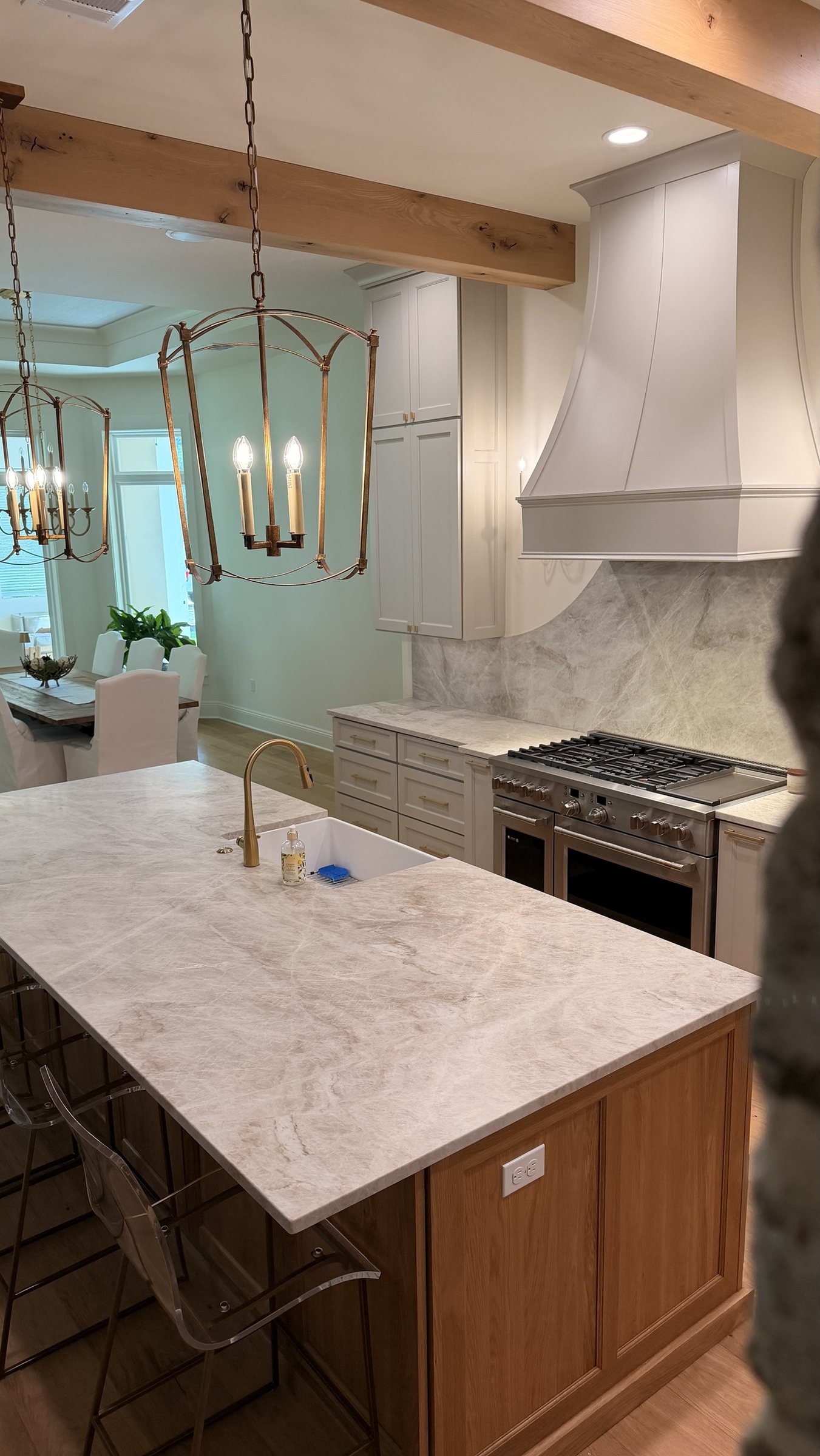
Quartzite or Marble? How to Choose for the Way You Live
Both are natural stone, and both are beautiful. The real difference is how each one handles everyday life in your kitchen.


Clients ask us this almost every week. They fall in love with a white marble, then hear quartzite is “stronger” and don’t know which way to go. Here is the honest answer.
What marble is
Marble is limestone that changed under heat and pressure. It’s made mostly of calcite, which gives it that soft, deep glow. It’s also why acids like lemon, wine and vinegar can etch it, leaving a dull mark where the shine was.
Etching is not a stain, and it’s not a defect. Over the years marble builds a patina, the same look you see on old bars and bakery counters in Europe. Some people love that. Some people don’t.
What quartzite is
Quartzite started as sandstone and was pressed into one of the hardest natural stones you can put in a kitchen. True quartzite resists scratches and stands up to acids much better than marble.
One warning: not every stone sold as quartzite is true quartzite. Some are softer stones that behave more like marble. Before you commit, ask to see a test on a sample, or ask us to show you how that slab reacts.
How to decide
- You cook a lot and want it to stay perfect: quartzite.
- You want the classic look and don’t mind a lived-in finish: marble.
- You love marble but worry about etching: consider a honed finish, which hides etching much better than polished.
- Bars, powder rooms and fireplaces: marble shines here, with less daily wear.
Either way, seal it and enjoy it
Both stones are porous and should be sealed. Wipe spills, use cutting boards, and the stone will outlast the cabinets around it.
The best way to choose is to see them side by side. Come to our gallery in Kenner and we’ll walk you through the slabs in person.
Want to see these stones in person?